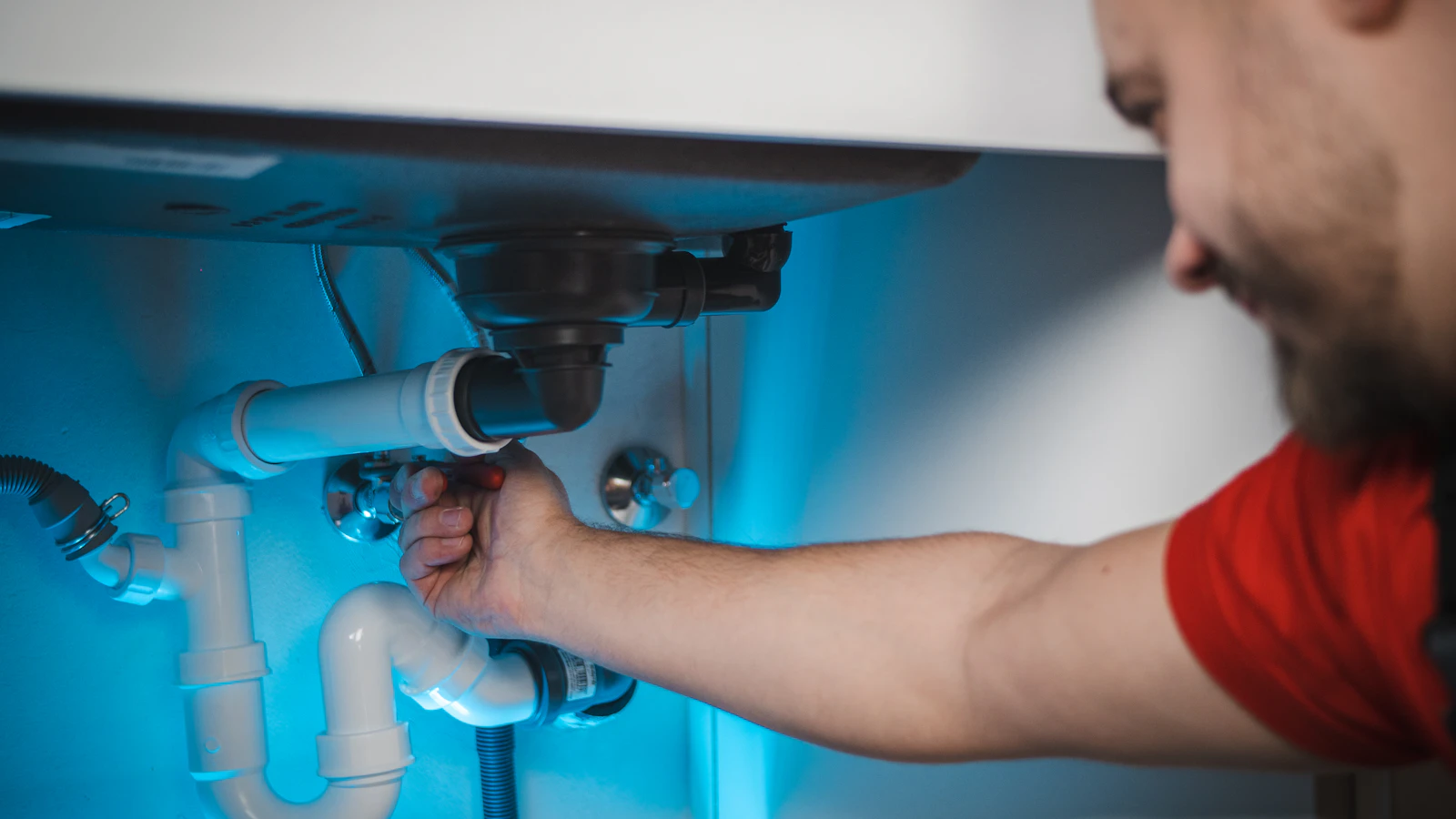
How to Install an Under-Sink Water Filter (Step by Step)
Step-by-step guide to installing an under-sink water filter yourself. Tools, shutoff valves, tubing, flushing, and when to call a plumber.

Table of Contents
- Know your system type before you start
- Inline carbon-block filters
- Dedicated-faucet systems
- Reverse osmosis systems
- Tools and materials you will need
- Step 1: Shut off the cold water and relieve pressure
- Step 2: Install the dedicated faucet (if your system has one)
- Step 3: Mount the filter housing
- Step 4: Connect to the cold-water supply line
- For inline systems (no dedicated faucet)
- For dedicated-faucet systems
- For reverse osmosis systems
- Step 5: Flush the system
- Step 6: Check for leaks
- Common installation mistakes
- When to call a plumber
- After installation: what to expect
TL;DR
Most under-sink water filters install in 30 to 90 minutes with basic tools. Shut off the cold water valve, disconnect the supply line, tee in the filter, mount it to the cabinet wall, flush per the manufacturer's instructions, and check for leaks. Carbon-block inline systems are the simplest. Reverse osmosis adds a drain saddle clamp and dedicated faucet. Know your limits: if you need to drill granite or relocate plumbing, call a plumber.
We recommend products we believe in. When you buy through links on this page we may earn a commission, which never changes what we recommend or what you pay. See our affiliate disclosure for details.
Installing an under-sink water filter is one of the best upgrades you can make to your kitchen. The water is filtered at the point of use, there is nothing on the counter, and once it is in, you barely think about it again until it is time to swap the cartridge.
The good news is that most systems are designed for DIY installation. You do not need a plumber for a basic carbon-block or ultrafiltration filter. The bad news is that "under-sink water filter" covers several very different setups, and the install steps change depending on the type. This guide walks through all of them.
If you have not chosen a system yet, start with our best under-sink water filter roundup to find the right match for your water and cabinet.
Know your system type before you start
The installation process depends entirely on which type of under-sink filter you bought. There are three main categories, and each has different plumbing requirements.
Inline carbon-block filters
These connect directly into your cold-water supply line and deliver filtered water through your existing kitchen faucet. No second faucet, no drain line, no tank. Examples include the Frizzlife MK99 and similar single- or dual-stage carbon systems. This is the simplest install.
Dedicated-faucet systems
These include most ultrafiltration systems and some premium carbon-block systems. They come with a separate faucet that mounts in a spare hole on your sink or countertop. The filter tees off the cold-water line but sends filtered water only through the dedicated faucet, leaving your main faucet unfiltered.
Reverse osmosis systems
RO systems have the most components: a dedicated faucet, a drain saddle clamp that connects to your sink's drain pipe, and often a pressurized storage tank. Tankless RO systems skip the tank but still need the faucet and drain connection. If you are installing one of these, see our best reverse osmosis system guide for model-specific notes.
Tools and materials you will need
Gather everything before you start. Lying under a sink with one hand on a leaking fitting while the other searches for a wrench is not efficient.
Tools:
- Adjustable wrench (two is better)
- Bucket or large towel
- Flashlight or headlamp
- Teflon tape (PTFE thread seal tape)
- Drill with appropriate bit (only if drilling a faucet hole or mounting bracket)
- Basin wrench (helpful for tight faucet connections)
- Utility knife or tubing cutter (for cutting flexible tubing to length)
- Pencil or marker for bracket placement
Materials (usually included with your system):
- Filter housing and cartridge(s)
- Mounting bracket and screws
- Flexible tubing (typically 1/4-inch for RO, 3/8-inch for carbon-block)
- Push-fit or compression fittings
- Feed water adapter or tee valve
- Dedicated faucet (if applicable)
- Drain saddle clamp (RO systems only)
Check your kit against the manual's parts list before you start. Missing a single fitting means a trip to the hardware store mid-install.
Step 1: Shut off the cold water and relieve pressure
Locate the cold-water shutoff valve under your sink. It is usually the valve on the right side. Turn it clockwise until it stops. Then open the kitchen faucet to release any remaining pressure in the line. Let it run until the flow stops completely.
Place a bucket or towel under the connections. There will be residual water in the lines when you disconnect them.
If the valve does not shut off completely: Some older gate valves fail to seal after years of disuse. If water keeps trickling after you turn the valve fully, you need to replace the shutoff valve before installing the filter. This is a separate job, and it is the point where many DIYers rightly call a plumber.
Step 2: Install the dedicated faucet (if your system has one)
Skip this step if you have an inline system that uses your existing faucet.
Most sinks have a spare hole covered by a soap dispenser cap or a blank plate. If you have one, remove it. If not, you need to drill a hole. Drilling stainless steel requires a step bit and patience. Drilling granite, quartz, or marble requires a diamond-tipped bit, constant water cooling, and a steady hand. If your countertop is stone, consider hiring a professional for this step alone.
Thread the faucet stem through the hole from above. From below, slide on the rubber gasket, the metal washer, and the mounting nut. Tighten with a basin wrench until the faucet is snug and does not rotate. Do not overtighten — you can crack porcelain or deform a thin stainless sink.
Step 3: Mount the filter housing
Most systems come with a mounting bracket that screws into the cabinet wall. Hold the bracket in place, mark the screw holes with a pencil, and pre-drill if the cabinet is hardwood or particleboard. Drive the screws and hang the filter housing on the bracket.
Position the housing so the cartridges face downward and have enough clearance to be removed during future replacements. A common mistake is mounting it too high, which makes filter changes a wrestling match.
For reverse osmosis systems with a storage tank, place the tank on the cabinet floor with enough room for the tubing. The tank should stand upright and not be wedged against the disposal or other plumbing.
Step 4: Connect to the cold-water supply line
This is the core of the installation, and the exact method depends on your system and your existing plumbing.
For inline systems (no dedicated faucet)
- Disconnect the cold-water supply line from the shutoff valve.
- Attach the tee adapter or feed water valve that came with your system to the shutoff valve.
- Reconnect the original supply line to one port of the tee.
- Run a length of tubing from the other port of the tee to the filter's inlet.
- Run a second length of tubing from the filter's outlet back to the cold-water faucet connection.
Most modern systems use push-fit (John Guest style) fittings. Cut the tubing square with a sharp blade, push it into the fitting until it clicks, and give it a gentle tug to confirm it is seated. Do not use Teflon tape on push-fit connections; it is not needed and can cause leaks.
For dedicated-faucet systems
- Disconnect the cold-water supply line from the shutoff valve.
- Attach the tee adapter to the shutoff valve.
- Reconnect the original supply line (unfiltered) to one port.
- Run tubing from the tee to the filter's inlet.
- Run tubing from the filter's outlet to the dedicated faucet stem under the sink.
For reverse osmosis systems
Follow the dedicated-faucet steps above, then add two more connections:
- Drain line: Clamp the drain saddle onto the sink's drain pipe above the P-trap (never below it). Drill through the pipe at the marked point using the bit included in the kit. The drain line from the RO membrane connects here.
- Tank connection: Run tubing from the system's tank port to the tank's valve. The tank ships with air pressure pre-set; do not adjust it until the system is full.
Step 5: Flush the system
Do not skip this step. Every new filter needs flushing before the water is safe to drink.
Carbon-block filters release fine black carbon particles that are harmless but unappetizing. Run the system for at least 5 minutes, or until the water runs clear.
Ultrafiltration systems often require 10 to 15 minutes of flushing to purge preservatives from the membrane.
Reverse osmosis systems need the most flushing. Fill and drain the storage tank at least twice, which can take several hours. The first tank or two of water will taste flat or have a slight chemical taste from the membrane preservative. This is normal and clears completely.
Check your manual for the exact flush time. Manufacturers test their flush recommendations, and shortcutting them means drinking carbon fines or membrane chemicals.
Step 6: Check for leaks
Turn the cold-water shutoff valve back on slowly. Watch every connection point: the shutoff tee, the filter inlet, the filter outlet, the faucet connection, and the drain saddle if you have one.
Dry each fitting with a paper towel and wait 10 minutes. Then check again. Some leaks only appear under steady pressure, not immediately. A slow drip at a push-fit connection usually means the tubing was not cut square or was not inserted fully. Pull it out, re-cut, and re-insert.
For threaded connections, a leak means the Teflon tape is not seated. Remove the fitting, add two or three wraps of tape in the clockwise direction (when looking at the end of the threads), and reconnect.
Common installation mistakes
These are the issues we see most often, and they are all avoidable.
Connecting to the hot water line. Under-sink filters are cold-water only. Hot water damages the filter media and can release contaminants. The cold line is typically the right-side valve.
Mounting the filter too high. Leave at least 3 to 4 inches of clearance below the cartridge for removal. Better yet, do a test fit with the cartridge hanging before you drill.
Forgetting to flush. Carbon fines turn your first few glasses black. Membrane preservatives taste terrible. Flush fully before drinking.
Overtightening plastic fittings. Plastic threads crack under the same torque that metal threads handle. Hand-tight plus a quarter turn with a wrench is usually the limit.
Placing the drain saddle below the P-trap. On RO systems, the drain connection must be above the P-trap. Below the trap, sewer gas can back up into the system.
Not checking the shutoff valve first. A valve that does not fully close turns a 45-minute install into a flood. Test it before you disconnect anything.
When to call a plumber
DIY is fine for standard installations with accessible plumbing and a working shutoff valve. Call a professional when:
- Your shutoff valve is corroded, seized, or does not stop the water
- You need to drill through granite, quartz, or marble for a faucet hole
- Your home has non-standard plumbing (galvanized pipe, polybutylene, or unusual sizing)
- You need to relocate the shutoff valve or add one where none exists
- The install requires opening a wall to access pipes
- You are not comfortable working with plumbing and a small leak would damage the cabinet or floor below
A plumber typically charges between $150 and $300 to install an under-sink filter system, including the faucet. That is reasonable insurance against water damage if the job is beyond your comfort level.
After installation: what to expect
The first day after installation, check under the sink two or three times for drips. Some connections that seem dry initially can weep once the system has been under pressure for a few hours.
Your water pressure at the filtered faucet may drop slightly compared to the unfiltered supply. This is normal, since water is passing through filter media. Carbon-block systems have minimal drop. Reverse osmosis systems have more noticeable flow reduction, especially tankless models that filter on demand.
Filter replacement intervals start from the day you install. Mark the date on a calendar, set a phone reminder, or use the manufacturer's indicator light if your system has one. For help staying on top of replacements across different filter types, see our best under-sink water filter picks, which include filter life data for every recommendation.
Most under-sink systems need a cartridge swap every 6 to 12 months for carbon stages and every 2 to 3 years for RO membranes. The swap itself takes 5 minutes once you have done it once: shut off the water, twist out the old cartridge, twist in the new one, and flush briefly. It is dramatically simpler than the initial install.