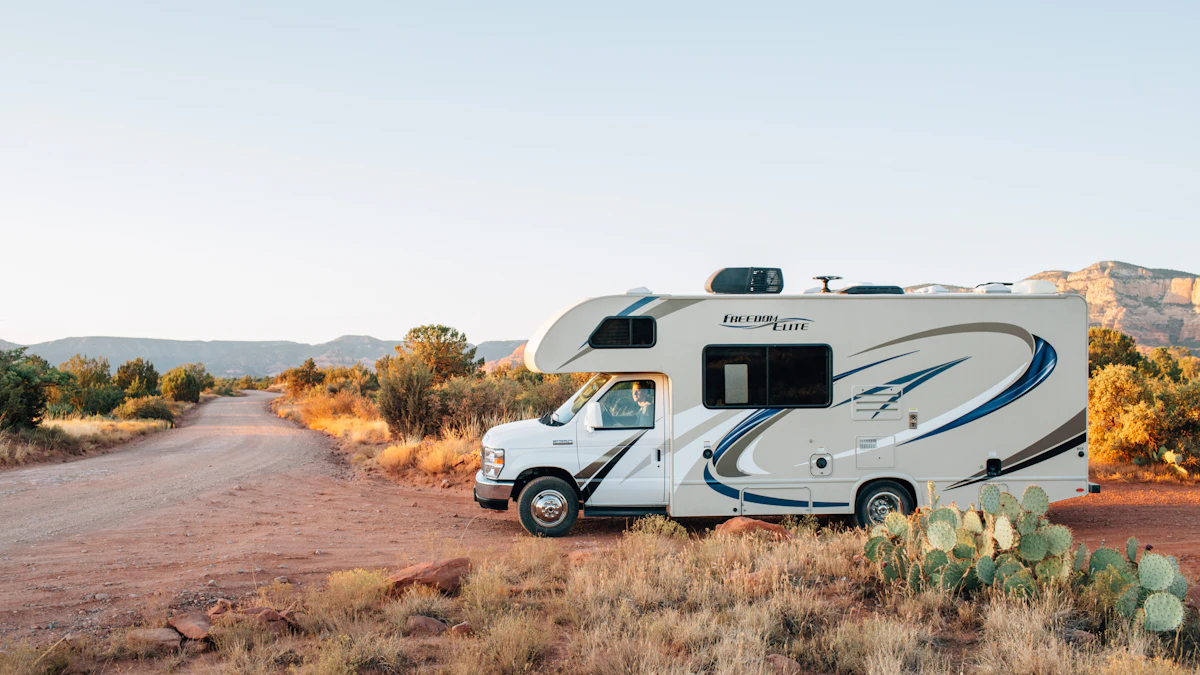
Best RV Water Filters (2026)
We tested the best RV water filter picks for inline, dual-canister, and softener setups so you can trust any campground spigot you connect to.

Table of Contents
- What to look for in an RV water filter
- Flow rate in GPM
- Micron rating and sediment
- KDF and scale control
- The best rv water filter picks for every camper
- Our top picks at a glance
- Camco TastePURE RV Water Filter (best overall)
- Clearsource Premier RV Water Filter System (best for full-timers)
- On The Go OTG4-DBLSOFT Portable Water Softener (best for hard water)
- APEC RO-CTOP-C Countertop Reverse Osmosis (best drinking water)
- Travel Berkey Gravity-Fed Water Filter (best for boondocking)
- AQUACREST RV Inline Water Filter (best budget)
- How to choose an RV water filter
- How we evaluated these filters
TL;DR
Our top pick is the Camco TastePURE inline filter for its 20-micron sediment and KDF/carbon protection at a high 6 to 7 GPM flow that RV pumps love. Full-timers should step up to the Clearsource Premier dual-canister system for 0.2-micron filtration. Clean Water Critic chose six picks spanning inline, dual-canister, softener, RO, and gravity setups.
Full Comparison
| # | Product | Best For | Rating | Price | |
|---|---|---|---|---|---|
| 1 | Camco TastePURE RV Water Filter (40043) Top Pick Camco | Most RVers who want simple, high-flow inline protection | 4.7 | $15 to $20 | Check Price |
| 2 | Clearsource Premier RV Water Filter System Clearsource | Full-timers wanting 0.2-micron dual-canister filtration | 4.8 | $300 to $360 | Check Price |
| 3 | On The Go OTG4-DBLSOFT Portable Water Softener On The Go | RVers parked in hard-water regions | 4.7 | $280 to $320 | Check Price |
| 4 | APEC RO-CTOP-C Countertop Reverse Osmosis System APEC Water Systems | Full-timers who want bottled-quality drinking water | 4.6 | $190 to $230 | Check Price |
| 5 | Travel Berkey Gravity-Fed Water Filter Berkey | Boondockers filtering off-grid water sources | 4.7 | $310 to $360 | Check Price |
| 6 | AQUACREST RV Inline Water Filter (2 Pack) AQUACREST | Budget shoppers who want spare cartridges on hand | 4.6 | $25 to $30 for two | Check Price |
We recommend products we believe in. When you buy through links on this page we may earn a commission, which never changes what we recommend or what you pay. See our affiliate disclosure for details.
Campground water is a gamble. You pull into a new site, screw your hose onto a spigot you have never seen, and you have no idea what is on the other side. It might be clean municipal water. It might be a shallow well that runs cloudy after rain. It might be shared park plumbing that has been baking in summer heat since the place opened.
We have connected to enough rusty faucets and rural wells to learn that a good filter is not optional. It protects your taste buds, your water heater, and the pump and tank that are expensive to replace. The right setup depends on how you travel, though, so we tested inline disposables, dual-canister rigs, softeners, countertop reverse osmosis, and gravity units to cover every kind of RVer.
This guide breaks down what actually matters for a camper, then walks through six picks at different price points and use cases. We weighed flow rate, micron ratings, and honest tradeoffs so you can match a filter to your rig instead of buying the loudest marketing claim.
What to look for in an RV water filter
A house filter and an RV filter solve different problems. In a house you have strong municipal pressure and unlimited power. In an RV you have a small 12-volt pump, modest city-water pressure, freezing risk, and a need to move the whole thing between trips. Three specs decide whether a filter works for camper life.
Flow rate in GPM
This is the spec most buyers skip and most regret. RV water pumps typically move only 3 to 5 gallons per minute, and a filter that restricts flow turns your shower into a trickle and your tank fill into a chore.
We look for inline filters that flow 6 to 7 GPM at 60 psi and canister systems that hold 2.5 GPM or higher. Below roughly 2 GPM you will feel the drop at the faucet. A finer micron rating almost always costs you flow, so this is the first tradeoff to think through.
Micron rating and sediment
Micron rating tells you the size of particle a filter stops. A 20-micron sediment filter catches sand, rust flakes, and grit, which is the dirt most likely to clog your RV plumbing and wreck your pump.
For taste, you want carbon, usually a 5-micron carbon block that grabs chlorine, off odors, and finer particles. Pathogen reduction needs a 1-micron or tighter stage, and a 0.2-micron absolute filter reduces bacteria and cysts. A two-stage setup, sediment then carbon, is the sweet spot for most RVers.
KDF and scale control
KDF media is a copper-zinc blend that reduces chlorine and controls bacteria, scale, and mold inside the filter. That matters in an RV because your filter sits damp and unused for weeks between trips, which is exactly when growth starts. KDF buys you cleaner storage and a longer-lasting cartridge.
If you park in hard-water country, scale is a separate fight. Standard filters do not soften water, so a portable RV water softener is a different tool for protecting your water heater and fixtures.
The best rv water filter picks for every camper
We split our picks across the real ways people use water in a rig. Weekenders want cheap, high-flow inline protection. Full-timers want fine filtration and great drinking water. Boondockers need to make any source safe with no power at all. Here is how we sort them before the detailed reviews below.
Our top picks at a glance
- Best overall: Camco TastePURE inline filter, high flow and dead simple
- Best for full-timers: Clearsource Premier dual-canister system, 0.2-micron filtration
- Best softener: On The Go OTG4-DBLSOFT, scale control with no power
- Best for drinking water: APEC RO-CTOP-C countertop reverse osmosis
- Best for boondocking: Travel Berkey gravity filter, no pressure needed
- Best budget: AQUACREST inline filter, spare cartridges included
Camco TastePURE RV Water Filter (best overall)
The Camco TastePURE (model 40043) is the blue inline filter you see hanging off half the spigots in any campground, and it earns that ubiquity. It uses granular activated carbon plus KDF behind a 20-micron sediment stage, and it is certified to NSF/ANSI 42 and 53 standards.
What sold us is flow. At 60 psi it moves 6 to 7 GPM, so it does not strangle your pump or your shower the way finer filters can. The included flexible hose protector keeps the connection from kinking at the spigot, which is a small thing that saves a lot of swearing.
Why we pick it: It is the easiest, cheapest way to keep grit and chlorine out of your rig, the flow rate is excellent, and KDF keeps the cartridge cleaner during storage. At $15 to $20 it is genuinely hard to beat for most RVers.
Tradeoffs: It is a disposable unit good for about one season, and the 20-micron rating means it handles sediment and taste but not fine pathogens. If your water source is genuinely sketchy, treat this as stage one, not your only defense.
Best for: Weekenders and most RVers who want set-and-forget protection without plumbing anything.
Clearsource Premier RV Water Filter System (best for full-timers)
When filtering matters more than convenience, a dual-canister system is the answer, and the Clearsource Premier is the one we keep coming back to. It runs two stages: a 5-micron coconut-shell carbon block, then a hospital-grade 0.2-micron absolute filter. Absolute means every pore is at or below the rated size, so the rating is a guarantee, not an average.
That second stage reduces sediment, chlorine, chloramines, VOCs, and pathogens that single inline filters wave right through. Despite the fine filtration, Clearsource designs the housings for RV reality, holding around 6 to 6.5 GPM so your water pressure survives.
Why we pick it: It is the most thorough campground filtration we tested that still flows well. For full-timers drinking and showering in this water every day, the jump from 20 microns to 0.2 microns absolute is real peace of mind.
Tradeoffs: At $300 to $360 it is a serious investment, and the canister rig is bulky to mount and store. You also pay for replacement cartridges over time. This is overkill for someone who camps four weekends a year.
Best for: Full-timers and frequent travelers who want the cleanest water from any spigot.
On The Go OTG4-DBLSOFT Portable Water Softener (best for hard water)
Filters clean water, but they do not soften it, and scale is a slow killer of RV water heaters and fixtures. The On The Go OTG4-DBLSOFT is a 16,000-grain portable softener that solves the problem with no electricity and no tools. It connects inline with a standard garden hose between the park faucet and your rig.
It regenerates with two boxes of common table salt in under 30 minutes and delivers up to about 1,600 gallons of soft water, or roughly 40 days, before it needs a refresh. The compact 22-inch tall, 9.5-inch diameter body fits in tight bays, and the design holds a high flow rate with low pressure drop.
Why we pick it: Soft water protects your plumbing, makes soap lather, and stops spotting on everything you wash. For RVers who chase warm winters through hard-water states, this is the most useful $300 you can spend.
Tradeoffs: It only addresses hardness, not sediment or taste, so you still want a filter upstream or downstream. It is heavy when wet, and regeneration is a periodic chore. If your water is already soft, you do not need it.
Best for: RVers parked in hard-water regions who want to protect fixtures and the water heater.
APEC RO-CTOP-C Countertop Reverse Osmosis (best drinking water)
Reverse osmosis is the gold standard for drinking water, and the APEC RO-CTOP-C brings it to RV life without permanent plumbing. It is a portable countertop unit that hooks to most standard faucets in seconds, runs four stages, and removes chlorine, taste, odors, and up to 99 percent of contaminants including lead, fluoride, and dissolved solids.
It produces up to 90 gallons per day at 60 psi, which is plenty for drinking and cooking. Because it sits on the counter and connects to your galley faucet, you can stow it for travel and set it up when you park.
Why we pick it: For full-timers who want bottled-quality water from the tap, RO is the cleanest result short of distillation. The installation-free design fits RV constraints far better than an under-sink system.
Tradeoffs: RO wastes water, sending several gallons to drain for each gallon produced, which stings on a finite tank. Flow at the faucet is slow, and it works best on city-water hookups rather than your pump. It is a drinking-water tool, not whole-rig filtration.
Best for: Full-timers who want the purest possible drinking and cooking water.
Travel Berkey Gravity-Fed Water Filter (best for boondocking)
When you are off grid with no hookup and no pressure, none of the inline filters above can help you. A gravity filter can. The Travel Berkey is a 1.5-gallon stainless system that uses Black Berkey elements to purify water using nothing but gravity, which makes it the boondocker's safety net.
Pour questionable lake, spring, or jug water into the top chamber and clean water collects below. With two elements it produces up to about 2.75 gallons per hour, and the elements last up to 6,000 gallons before replacement. The chambers nest for a compact travel profile.
Why we pick it: It needs no power, no pressure, and no plumbing, so it works anywhere. For dry camping where your water came from a fill station or a natural source, this turns uncertain water into safe drinking water.
Tradeoffs: It is slow, gravity-fed batch filtering, not on-demand, and the stainless chambers take up galley space. At $310 to $360 it costs more than people expect for a countertop unit. It complements your hookup filters rather than replacing them.
Best for: Boondockers and dry campers who need to filter off-grid water sources.
AQUACREST RV Inline Water Filter (best budget)
If you want the convenience of the Camco inline filter and a spare on hand, the AQUACREST two-pack is the value play. Each filter is NSF certified and uses KDF plus granular activated carbon behind a 20-micron sediment stage to reduce chlorine, bad taste, and odor.
You get two cartridges plus a rotating hose protector for $25 to $30, which works out to less per filter than buying singles. We swapped one onto a hard-water site and saw the same taste improvement we expect from this class of inline filter.
Why we pick it: It does the core job of a campground inline filter at the lowest cost per cartridge, and having a spare means you never wait on shipping when one clogs mid-trip.
Tradeoffs: Its flow rate runs lower than the Camco, closer to 0.5 GPM on the tighter listings, so check the model and expect a softer flow than the wide-body TastePURE. Like all 20-micron units it handles sediment and taste, not pathogens, and each cartridge lasts about three months.
Best for: Budget shoppers who want reliable basic filtration with backups included.
How to choose an RV water filter
Start with how you travel, not with the product. The right filter for a weekend warrior is the wrong filter for a full-timer, and both are wrong for a boondocker.
If you camp at hookup sites a handful of times a year, a single inline filter like the Camco TastePURE covers you. It stops the grit that threatens your pump, fixes most taste issues, and costs less than a tank of gas. Keep a spare cartridge in a bay.
If you live in your rig, step up to a dual-canister system. The leap from a 20-micron disposable to a 0.2-micron absolute second stage is the difference between cleaner water and genuinely safe water you trust every day. Pair it with a softener if you chase warm winters through hard-water states.
If you boondock, you need a tool that works without pressure or power, and gravity filtration is the only answer. A Berkey-style unit lets you make safe drinking water from a fill station or a natural source. It does not replace your hookup filters, it backs them up for the off-grid days.
For pure drinking water regardless of style, a countertop RO unit gives you bottled quality from the galley faucet, at the cost of some wasted water and slow flow. Many full-timers run an inline or canister filter for the whole rig plus an RO unit just for drinking.
Whatever you choose, winterize it. Pull every cartridge before you blow out your lines or add RV antifreeze, because antifreeze destroys carbon media and a frozen wet filter cracks its housing. Store cartridges sealed and start fresh in spring.
For comparison, our best gravity water filter guide goes deeper on off-grid options, and if your home base runs on a well, our best water filter for well water coverage applies to rural campgrounds too.
How we evaluated these filters
We judged every pick against the realities of camper life rather than ideal house plumbing. Flow rate came first, because a filter that strangles an RV pump fails no matter how clean the water is, so we favored inline units flowing 6 to 7 GPM and canisters holding 2.5 GPM or higher.
We verified micron ratings and certifications from manufacturer specs, prioritizing two-stage sediment-plus-carbon designs and noting which filters use absolute versus nominal ratings. We weighed KDF and scale control for storage life, since RV filters sit damp between trips.
We considered total cost honestly, including replacement cartridges and, for RO, water sent to drain. We also factored mounting, storage, and winterizing, because a filter you cannot stow or protect from freezing is a filter you will stop using. Finally, we matched each pick to a clear traveler type so you are not paying for filtration you do not need.
For more drinking-water options that overlap with RV use, see our best countertop water filter picks. You can browse all of our tested recommendations on our best water filters hub, and learn the fundamentals in our water filter guides.